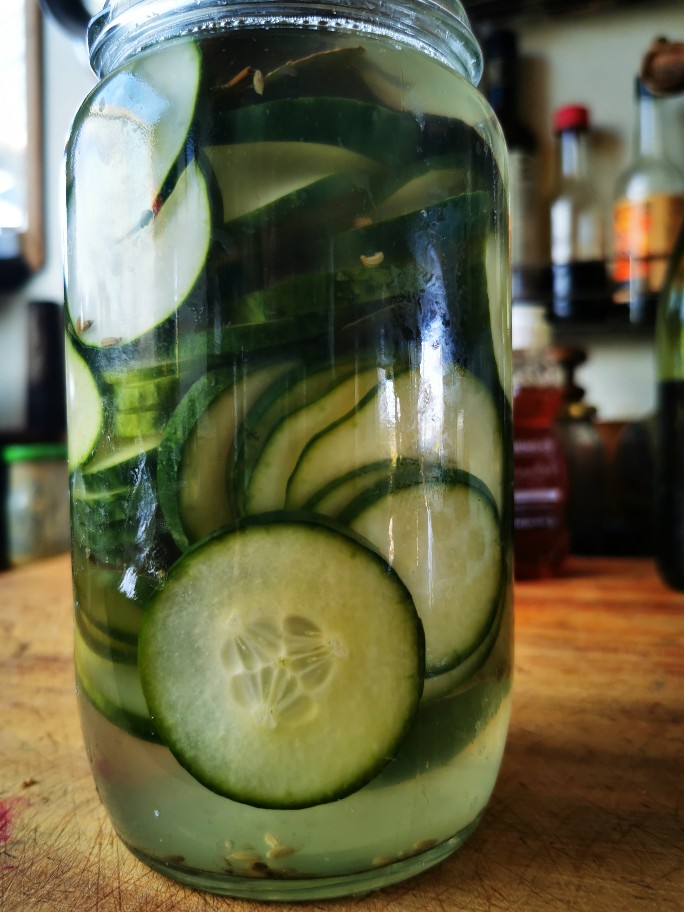
Fermentation uses naturally occurring lactic acid to preserve food. If you have never tried it, give it a go – you won’t believe why you ever messed around with boiling vinegar. It is the simplest method of preserving food used out of necessity thousands of years ago to preserve the summer bounty. Some really cold counties couldn’t grow anything during the winter so this was a vital way of getting some veges into you all year round and staying healthy. The food is not cooked which preserves nutrients and the lactic acid not only creates gut friendly bacteria but increases the micro and macro nutrients and bio availability of amino acids. Some foods are still commonly fermented today: sauerkraut and kimchi may be the most well known, but anything can be fermented. I often make a mexican style salsa and ferment it to enjoy for months as the weather turns cold. The basic principle is the same for all vegetable ferments: a sterile fermenting vessel is prepared; the vegetables are chopped/sliced/ grated and placed into the fermentation vessel with salt- either a brine is poured over (as with the cucumbers today), or salt is sprinkled between layers, (as with sauerkraut) or salt is added as part of the recipe (as with salsa or kimchi) – but in all cases you only use enough salt to taste good, you don’t want it to be too salty. The salt is not used to preserve the food. The presence of the salt discourages all the other bacteria which you don’t want in your pickle, and encourages the lactic acid, which you do want. The vessel is left at room temperature for a few days and allowed to naturally ferment. You know when fermentation starts because it acquires the distinctive umami-sour flavour of the lactic acid. When it is as sour as you like (keep tasting it – the longer you leave it, the more sour it will become) you can slow down the fermentation process by storing it in a cool place – I use the fridge. The vegetables will last for months, the only deterioration that occurs over time is that they become soft and lose their crunch after about three months, and after about six months become less palatable as they get softer and softer and can acquire a slimy texture. Over time a harmless white mould will float on the surface; you can spoon this off.
There is no need to worry about food safety because it will be totally obvious if it has gone wrong and you have bad bacteria in there. It will smell off and there may be ugly mould growing on top. In this case, throw it into the compost .
This Cucumber Pickle uses sliced cucumbers rather like Bread and Butter Pickles, although you can use whole small cucumbers flavoured with dill and this is the famous traditional dill pickles sold in delicatessens and used in sandwiches.
Another good one to try is grated beetroot. Here’s the recipe for the mexican style salsa, and click here for a demo on how to make sauerkraut.

 food ripe from my garden