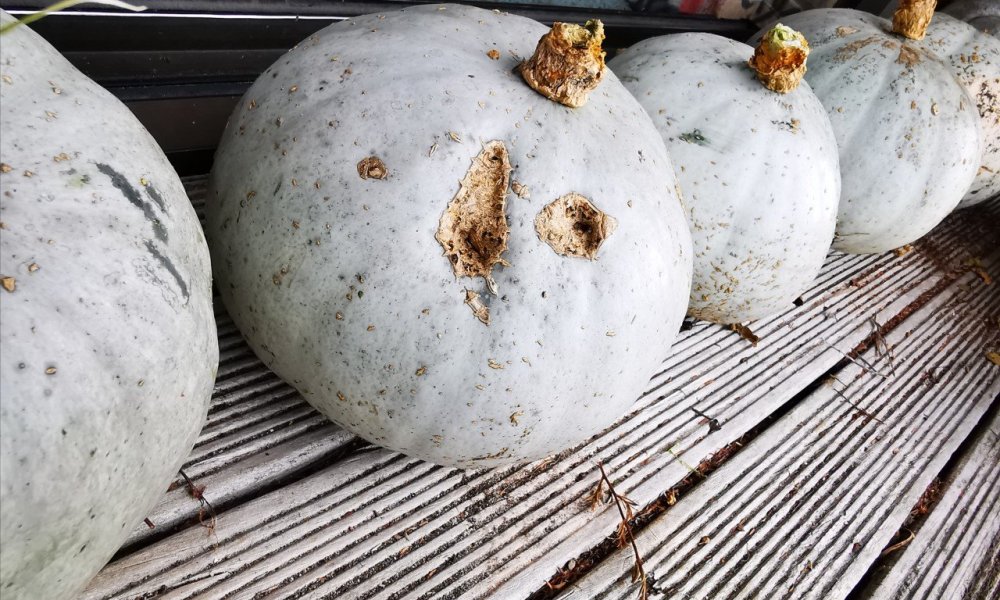
We harvested the crown pumpkins today and put them in a sheltered, sunny spot where they will ‘cure’ for three weeks. This process hardens the skin for winter storage and sweetens the flesh. I’m not sure how the ones with weka pecks will keep so will eat them first.
The words pumpkin and squash aren’t botanical names. A winter squash, so called because it will store over the winter (not because it grows in the winter), has a thick skin and is what we call in New Zealand a pumpkin. Summer squash have thin skins and do not store, examples of these are zucchini and scaloppini.
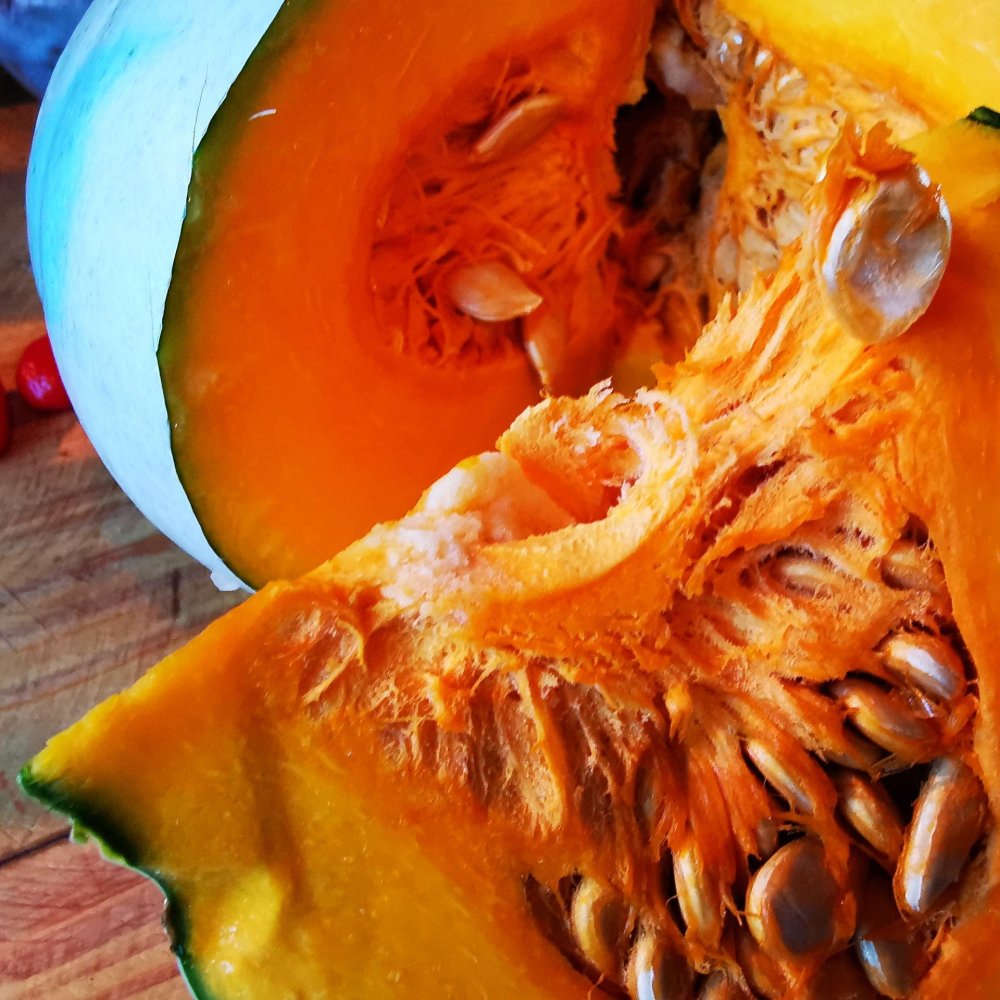
The word ‘squash’ which is indiscriminately applied to all curcubita species (and there is dispute as to whether there is 13 or 30 species here) is derived from the First Nations word askutasquash, which was a food staple for these ancient people and one of the ‘three sisters’ along with beans and corn. This North American squash, cultivated since prehistoric times, was delivered to Europe by the Spanish in the 16th century where it became confused with a pepo or peponi (Greek for melon, or ‘round fruit’), morphed into pompom (French) and pumpion (English) before turning up back in the Americas with the white colonists and called a pumpkin.
There are three main species of cucurbita that are grown in New Zealand: pepo, maxima and moschata. These three species all include both summer and winter squashes. Curcubita pepo includes zucchini as well as varieties of winter squash (or pumpkin) such as kumi kumi. Curcubita maxima includes hubbard, buttercup, triamble and crown pumpkin. Curcuba moschata includes in its rank butternut squash, calabaza pumpkin and a zucchini-like summer squash called zuchetta.
The interesting thing about this is that squashes will cross pollinate between the same species, but not with a different one. Cross pollinating means that when the bees fly around pollinating flowers indiscriminately one may happen to land on a male flower of one squash then a female flower of another squash in the same species. If this occurs, the progeny of the dalliance will grow into a hybrid of them both. Important to remember here that this will not happen to the pumpkins on the plant you are growing now, but on the ones that grow from the seeds of these fruit. A zucchini will cross pollinate with a kumi kumi, and a buttercup with a crown. If you are saving seed, or like me rely on the pumpkins self-seeding out of the compost bin in spring, you need to be careful about what you plant, and how far apart they are. To be on the safe side plants need to be a quarter to half a mile away from each other.

 food ripe from my garden