Aphrodite ate beetroot to increase her allure. Frescoes of beets decorate the walls of the Lupanare brothel in Pompeii. Beetroot, an ancient aphrodisiac, has a long history that begins on the shores of north Africa and the Mediterranean in a wild seashore plant called sea beet. The ancient Greeks and Romans only ate the leaves, so it is doubtful Aphrodite ate the roots. There is scientific basis behind the sex appeal of beetroot, which contains both high levels of boron, increasing the levels of sex hormones in humans and quantities of amino acids tryptophan and betain that helps our bodies make serotonin, the feel-good chemical in the brain.
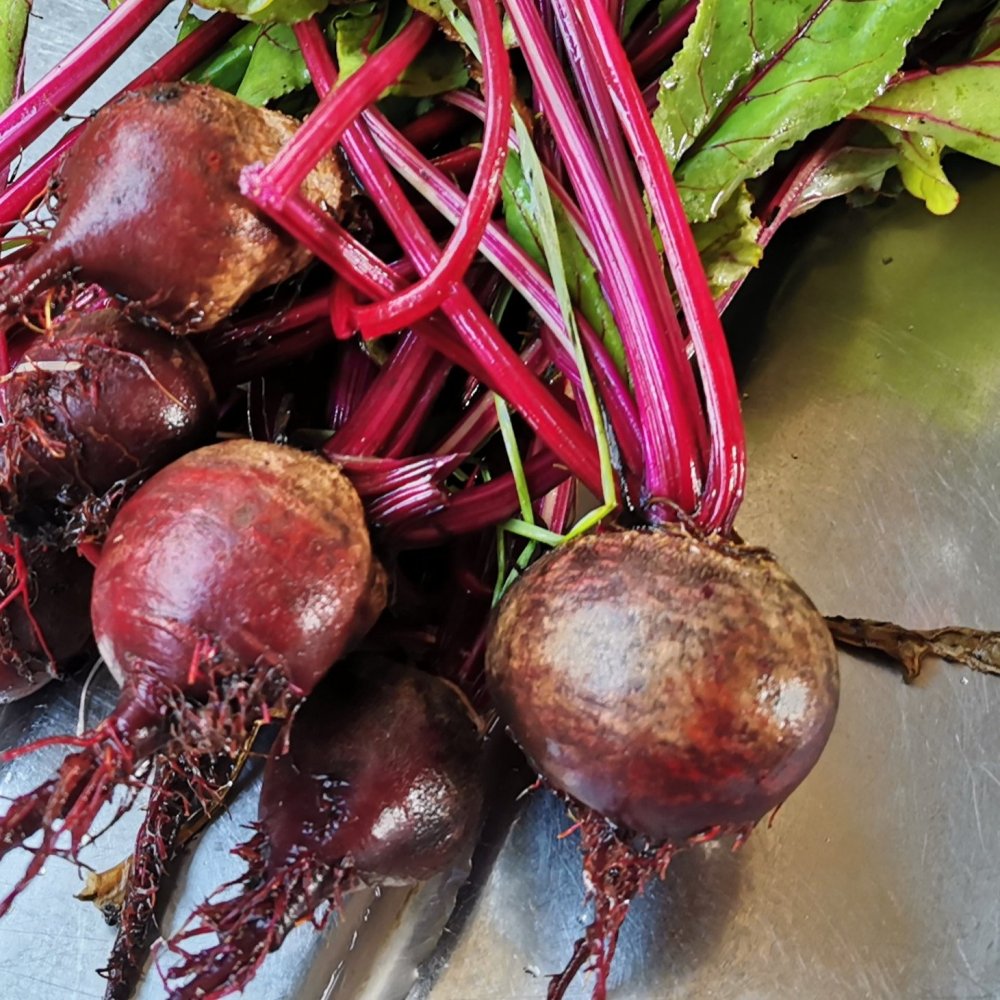
By the 18th century beetroot had been selectively bred to grow the deep red beets we call beetroot today.
The earthy taste of beetroot comes from an organic compound called geosmin (Greek geo: earth, and osme: odor) named so because it is the same terpenoid that is released by dead microbes in the soil after rain. Humans are extremely sensitive to geosmin – we can detect concentrations as little 5 parts per trillion, and it is thought this sensitivity could have been our ancient way of finding water, but it is a sensitivity which provokes a distasteful reaction in some people to beetroot. It is the same muddy taste we can detect sometimes in freshwater fish. The good news is that in both cases, it can be neutralised by the addition of acid. Lemon or vinegar, so often paired with beetroot and fish, will minimise the aroma of rainy days, a smell we love in the garden but not so much in our food.
Until recently scientists have not understood how beetroot comes to contain this compound. Could it be a reaction between the beetroot and the soil, or could it come from bacteria inside the beetroot itself? Now thought to be most likely, it is an endogenous synthesis from within the beetroot. And the reason? Perhaps to deter predators.
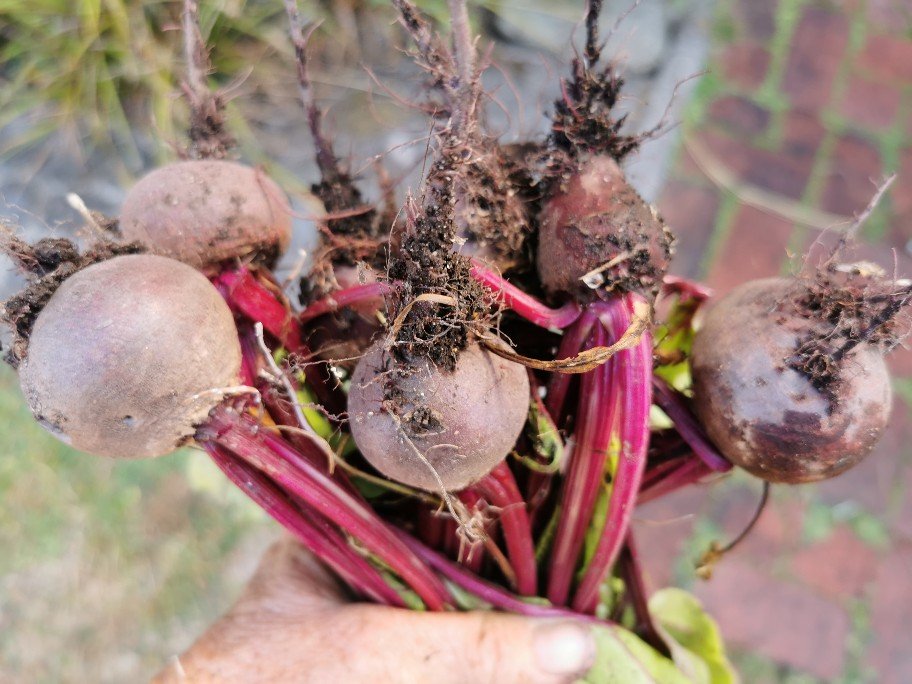
Beetroot, planted in late spring and summer, is a fast-growing plant that will fill tiny spaces between other slower growing plants like cabbage. It can be harvested in the summer and autumn and will overwinter happily in the garden before going to seed in the spring.

 food ripe from my garden