Another ancient medicinal herb with magical properties, fennel is a native of the Mediterranean. Wild fennel was naturalised throughout Europe , spreading eastwards into monastic gardens where it was used in herbal preparations and liqueurs, one of these being an early version of absinthe which has aniseed flavours derived from both anise and fennel.
Despite similarities in the sweet anise flavours, fennel and anise are not in the same family. The aniseed flavour of both is derived from the essential oils anithole and fenchone which are also present in licorice root and star anise (also not related.)
Pliny observed snakes rubbing against it which he presumed restored their sight and Hippocrates recommended it to help nursing mothers with milk secretion. By the 17th century the seed was a common remedy for digestive disorders. In India, a bowl of fennel seed is offered at the end of a meal to aid digestion. Fennel water, or ‘gripe water’ was a treatment for colic in babies in the middle ages when it was also hung from doorways, during mid-summer eve, to keep away evil spirits. Ayurvedic medicine considers fennel an aid for flatulence and colic. Since ancient days it was considered an aid to weight loss.
It grew so prolifically around the Mediterranean that two places were named after it: Marathon, in Greece, after ‘marathron’, or ‘to grow thin’ (maybe because of its weight loss attributes, perhaps because it grows thin stalks), and Funchal in Portugal (Funcho is Portuguese for fennel.)
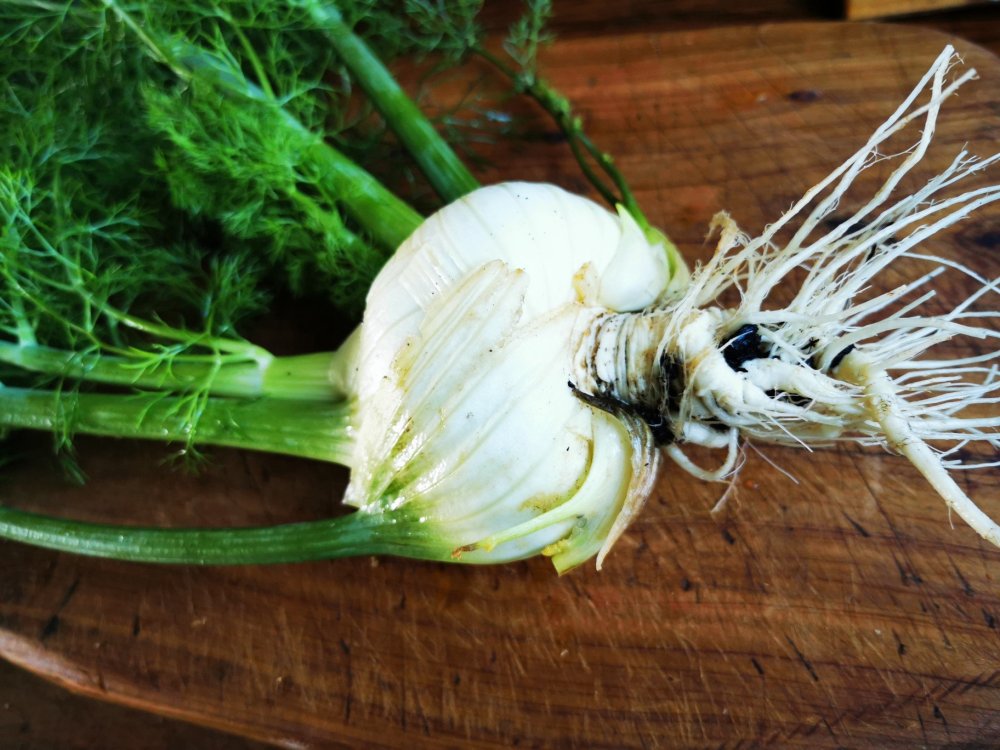
There are two main species of fennel. Wild fennel has become naturalized along riverbanks and dusty street verges and is a noxious weed in New Zealand. Florence Fennel, sometimes called sweet anise, with similar foliage and yellow umbrella-type flowers is eaten for its white bulb that is actually a swollen leaf base where the leaves join and overlap.
Florence Fennel grows easily in a New Zealand garden, not surprisingly considering how prolific is its wild cousin. It prefers colder weather and can be sown every two weeks during summer for autumn and winter harvest. It can be eaten cooked in braises or roasted and sliced thinly makes a crunchy winter salad.

 food ripe from my garden