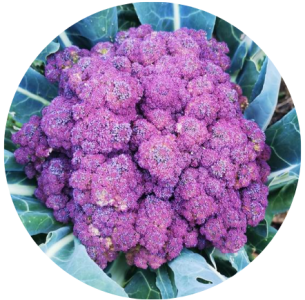
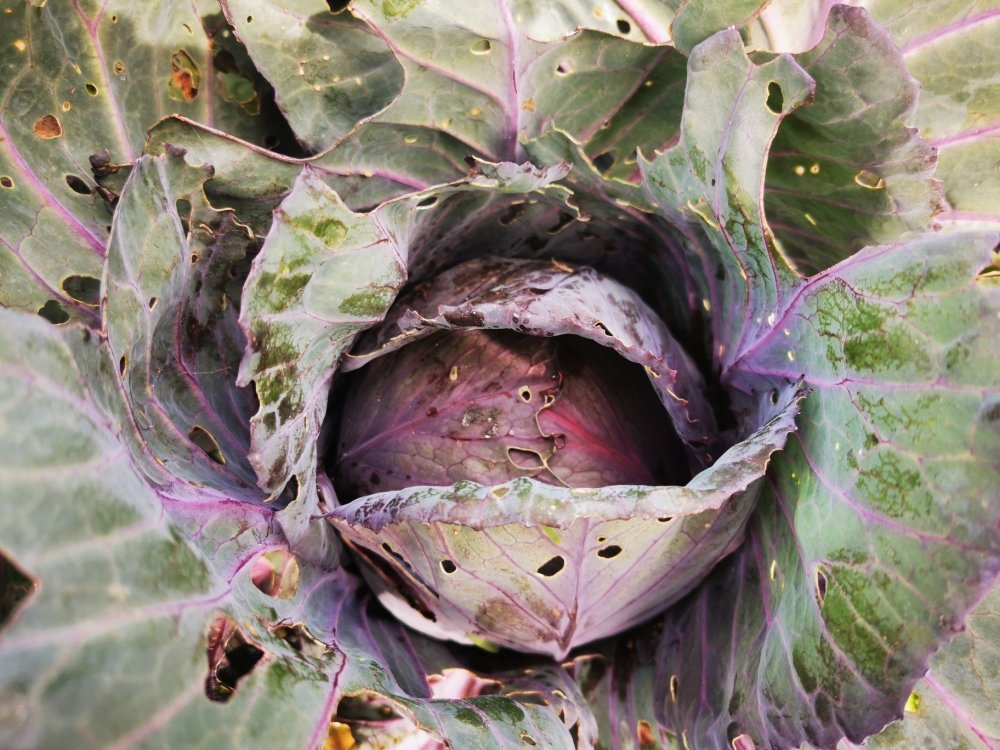
Today the winter sun is shining on the red cabbages. They are resplendent in their hues of red, blue, and purple. The sun, shining through the drab outer leaves, lights up an intricate network of red veins threading throughout.
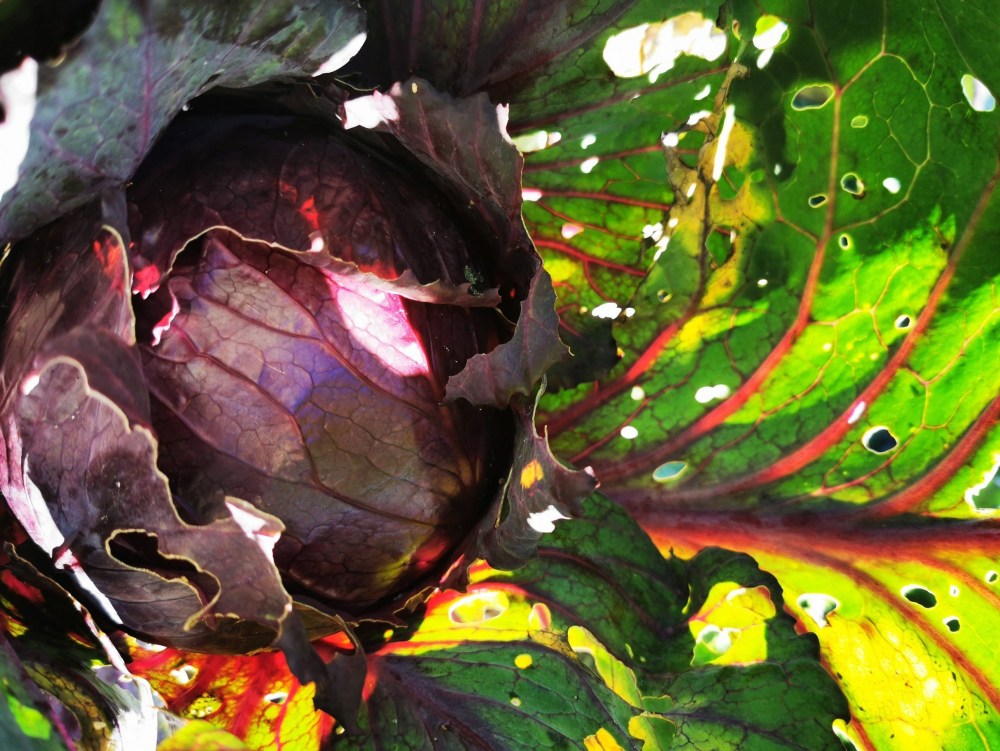
The colour of red cabbages varies according to the Ph level of the soil they are grown in. Acidic soils will produce red leaves, neutral soil makes them more purple, while in alkaline soil they will grow a greenish yellow.
Responsible for these colours are a group of flavonoid compounds called anthocyanins – the same antioxidants responsible for the blue, red, and black colourings in purple cauliflower, blueberries, raspberries, black rice, black beans and purple kumara. Beetroot is an exception – betanin is what makes them such a deep red.
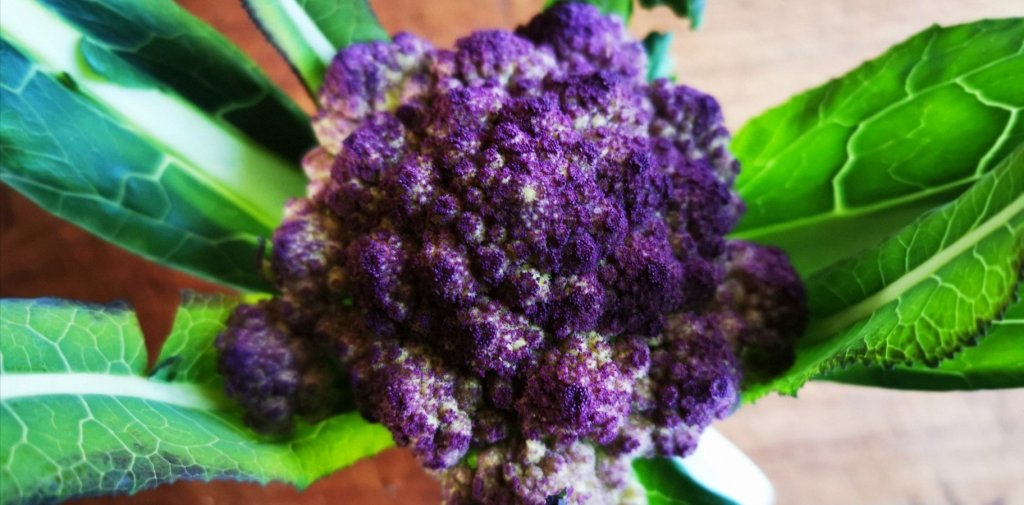
So can red cabbage and purple cauliflower be called superfoods in the same league as blueberries? Some say yes, others are less sure. The scientific articles suggest the jury is still out on this because it is unclear how ‘bio-available’ these compounds are in the human gut. With more than 36 different anthocyanins in a red cabbage, it has so far proven difficult for scientists to isolate their different pathways and absorption rates through the digestive tract.
These anthocyanins are antioxidants known to have anti-inflammatory, neuro-protective and anti-diabetic properties. Red cabbage and purple cauli also have all the benefits of brassicas generally, decreasing the risk of diabetes, obesity, heart disease, and overall mortality.
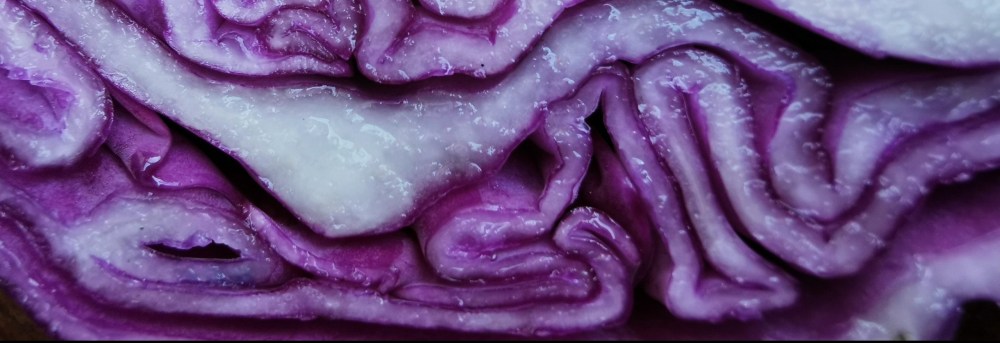
Cooking red cabbages and purple caulis will leach out the colour because the acids that help make them red evaporate and turn blue. By adding acid in the form of vinegar or lemon, the colour will be locked in.
It is interesting how unpacking the etymology of a vegetable can give clues to its history. In the mid-15th century,a hearting cabbage was called a caboge, from Old North French caboche, meaning head, derived from old French caboce, and a diminutive from the Latin caputor “head”.
These heading varieties were confined to northern Europe, while nearer the Mediterranean non-hearting types of cabbage flourished, and so from the ancient Greek καυλός or Kauli, (stem, shaft or penis) came Latin for stem (‘caulis’), the Italian cavolo and the Spanish col. This was subsequently borrowed by the Germanic languages and became kool, or kale in Scotland.

 food ripe from my garden