minestrone
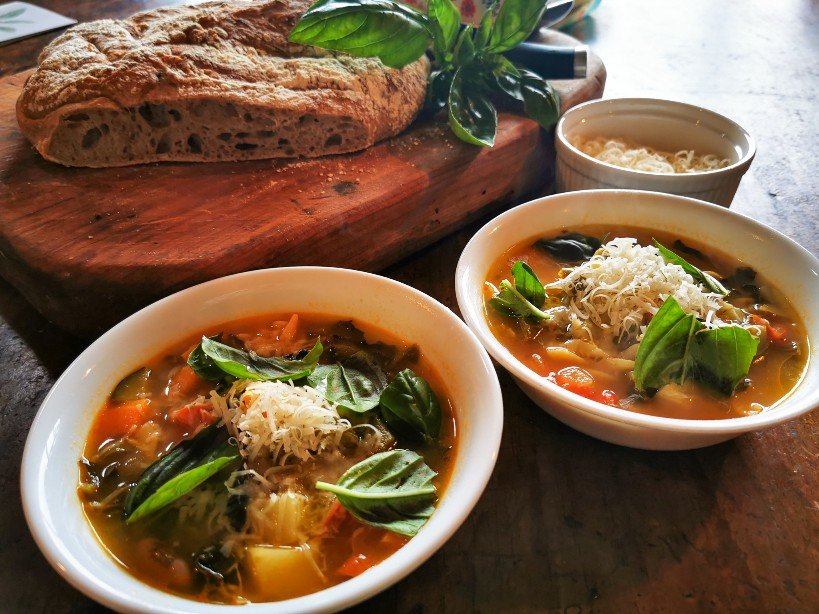
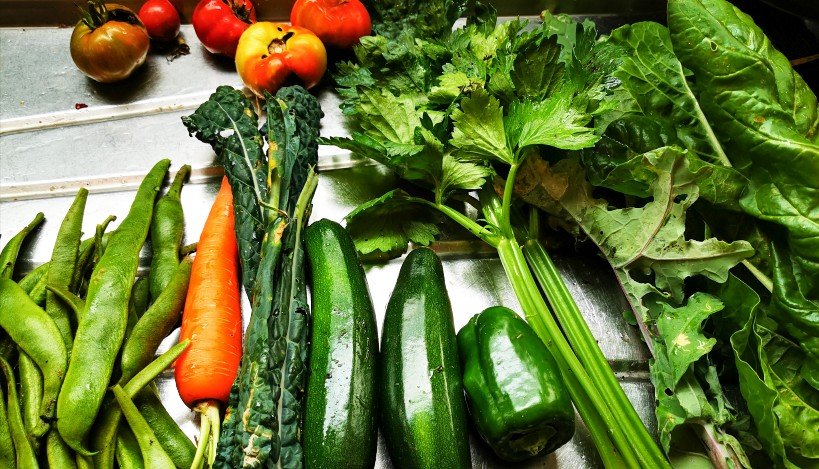
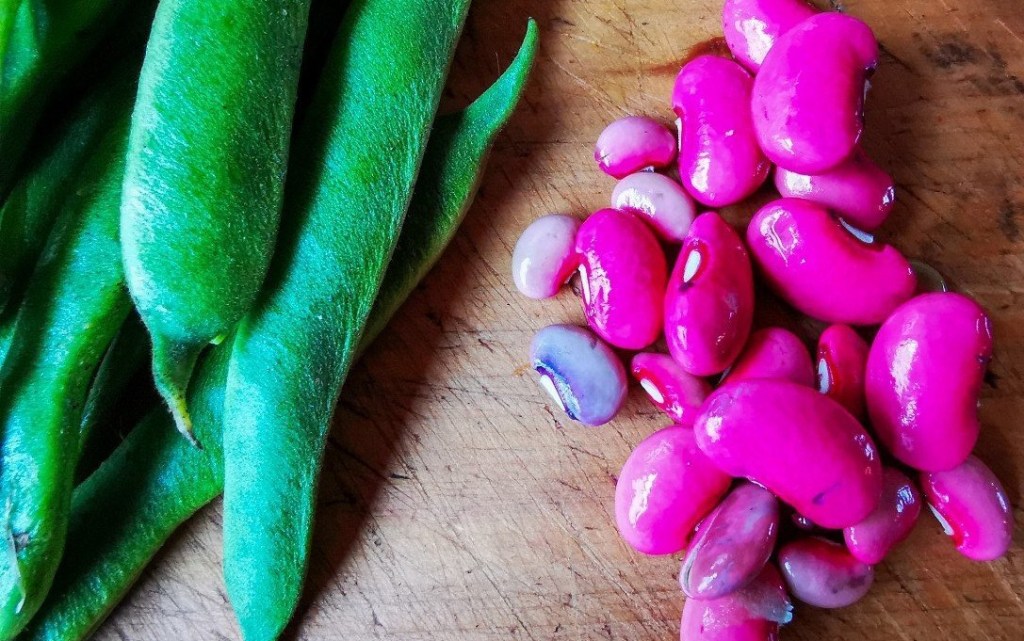
Our autumn garden is on the cusp of summer and winter. The runner beans are finally on their last legs (they have been pumping out beans since mid-December). I picked the last of them this morning ahead of heavy rain, along with the ripening tomatoes which would have split in the rain. The rainy day gave me a thirst for soup, and the beans and tomatoes in my basket sang ‘minestrone!’. At least half of the beans were big enough to shell to use instead of borlotti beans. I found a zucchini and a late capsicum, then made the first pickings of celery and cavalo nero.
I grew up in an English family where minestrone was regarded as a kind of tomato soup with pasta and a few vegetables thrown in. As a cook at the Aro St café in Wellington in the 80’s, I was kindly put right by an old Italian poppa who came gesticulating into the kitchen to tell me ‘too much tomato!’ He explained the broth should only be lightly flavoured with tomato.
There are a few famous versions of peasant vegetable soups that are enriched with pasta and/or beans. In the south of France they have pistou, and in Tuscany they make ribolata which is thickened with bread. Some versions of minestrone use rice instead of pasta.
I sweated the diced carrot, onion and celery in olive oil with 3 squashed and sliced garlic cloves. In went the scungiest tomatoes to use them up, the ones with insect attacks and holes in them (cut out of course). Then some halved cherry tomatoes –about 400 gm tomatoes all up (or use a can of diced tomatoes). I let them cook down until they gave up their juices, then poured in 1.5 litres organic chicken stock. You could use vegetable stock, or stock cubes. You could even use water, but it would be less flavourful. Once simmering I added the diced capsicum, sliced beans, shelled beans, a diced potato, the zucchini, and half a scallopini. I let this cook for 15 minutes and added a cup of pasta. It doesn’t matter which kind of pasta but break it up if it is long. In went the sliced cavalo nero. At the end pour in more extra virgin olive oil, as much or as little as you feel comfortable with or can afford.
Serve with a good bread, basil leaves and parmesan to sprinkle.
In case you are wondering, the shelled beans lost that amazing cerise colour when they were cooked and became greyish white 😦
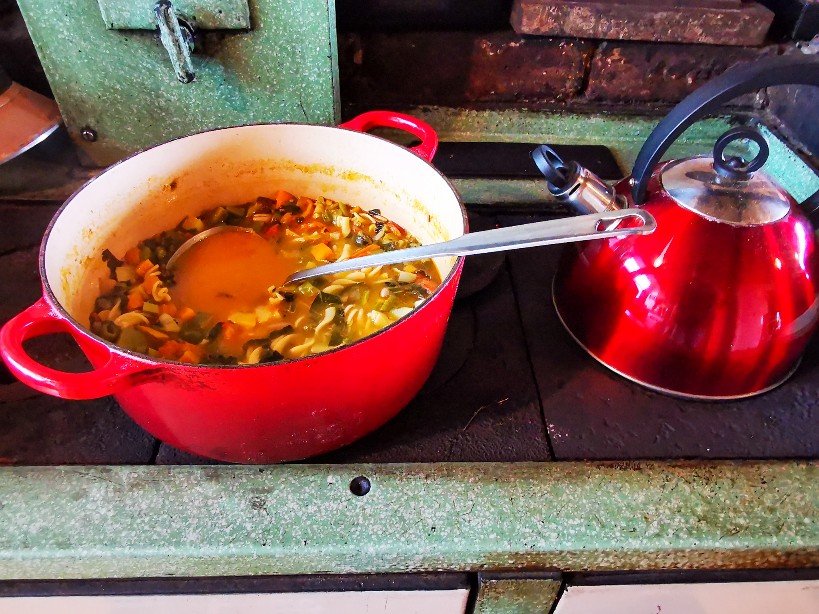

 food ripe from my garden