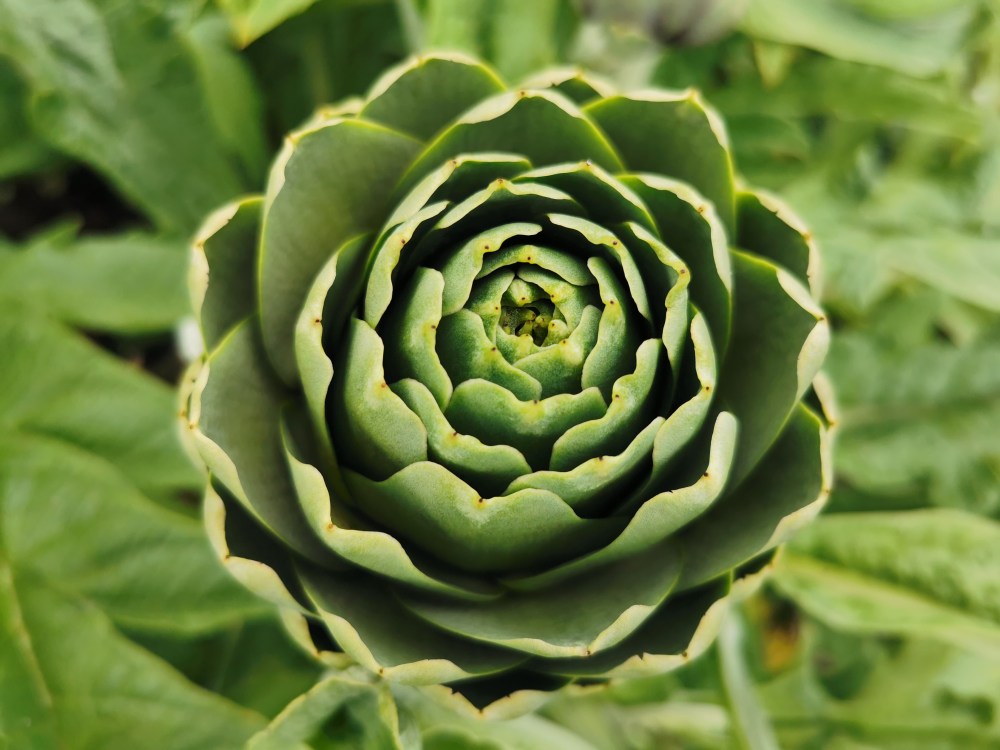
The globe artichoke is a large and handsome thistle that emerges from our winter garden in August. By November, the plants are as tall as us and the flower heads are reaching for the sky from very the center of the plant. It is the immature flower bud we eat; if left to mature the thistle produces a startling purple flower.
The blossom of the thistle, improved by the Arabs, passed from Naples to Florence in 1466, carried by Filippo Strozzi. Towards 1480 it is noticed in Venice, as a curiosity. But very soon veers towards the northwest…Artichoke beds are mentioned in Avignon by the notaries from 1532 onward; from the principle [sic] towns they spread into the hinterlands … appearing as carchofas at Cavaillon in 1541, at Chateauneuf du Pape in 1553, at Orange in 1554. The local name remains carchofas, from the Italian carciofo … They are very small, the size of a hen’s egg … and are still considered a luxury, a vaguely aphrodisiac tidbit that one preserved in sugar syrup.
Le Roy Ladurie, Les Paysans de Languedoc,
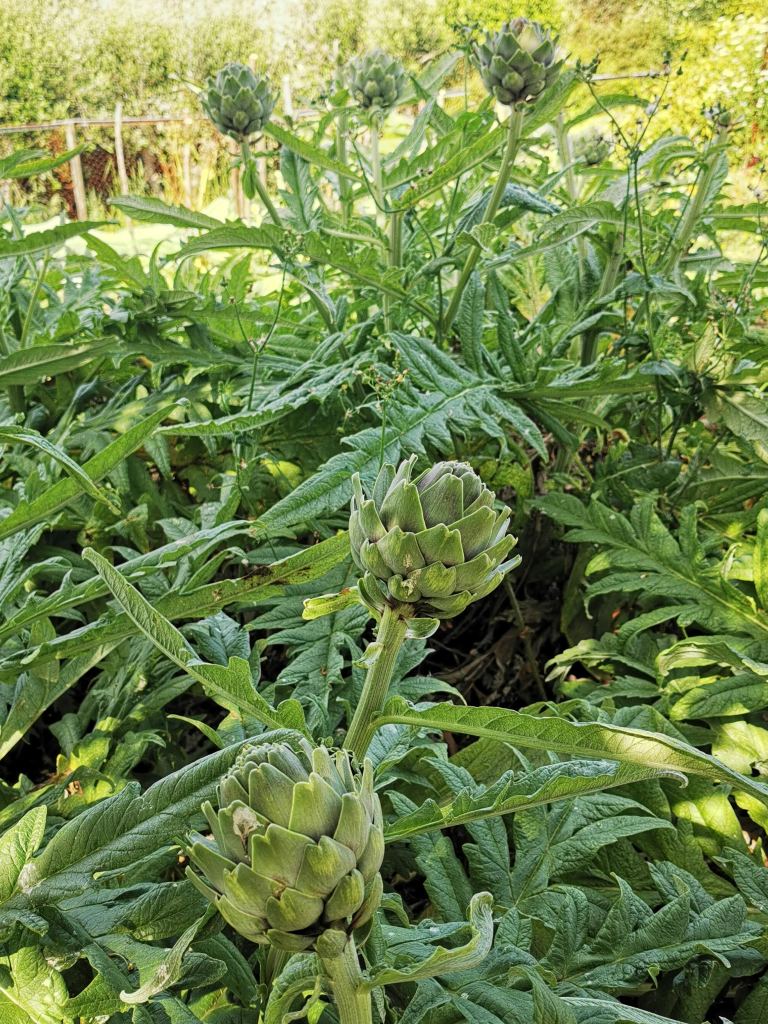
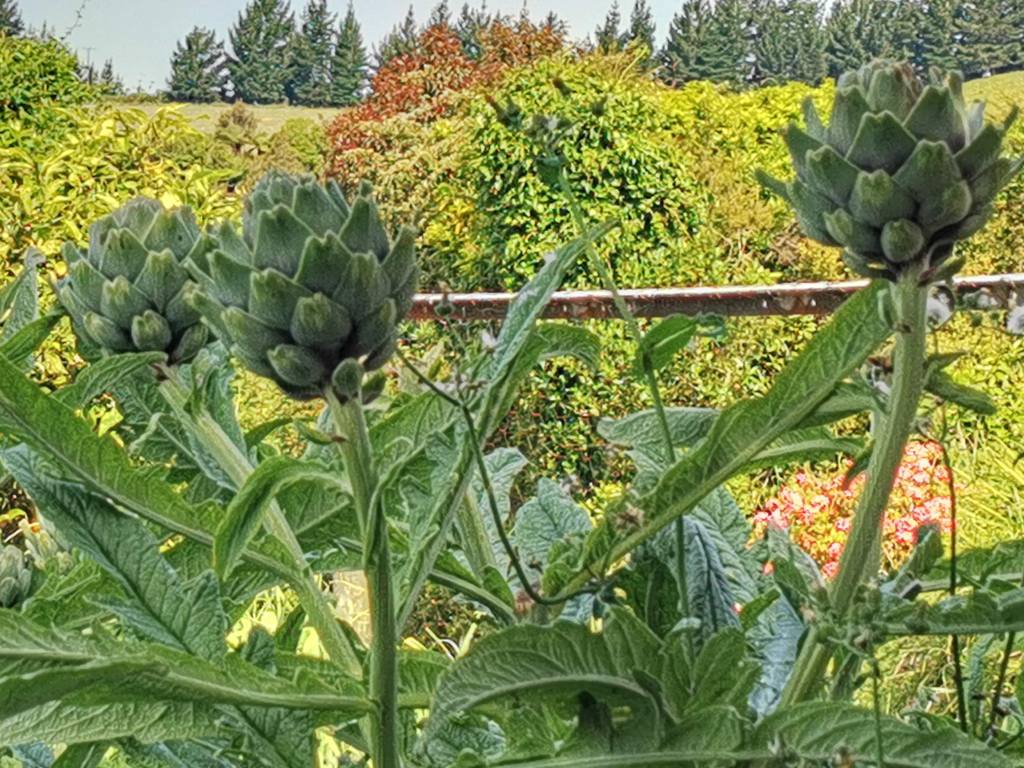
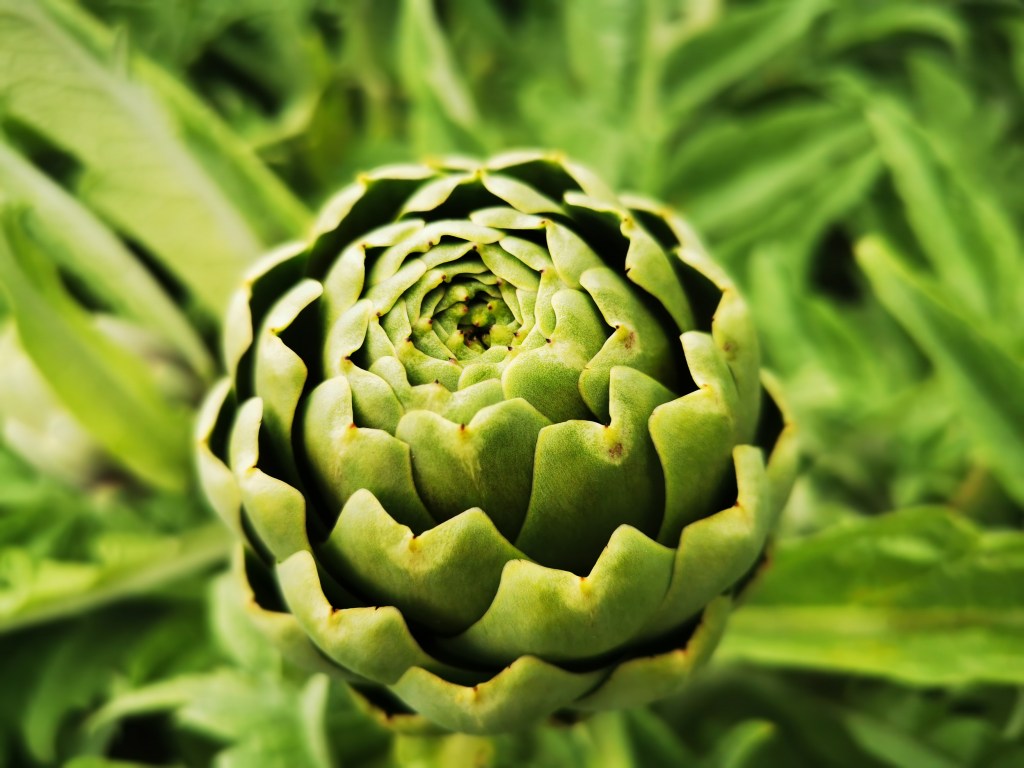
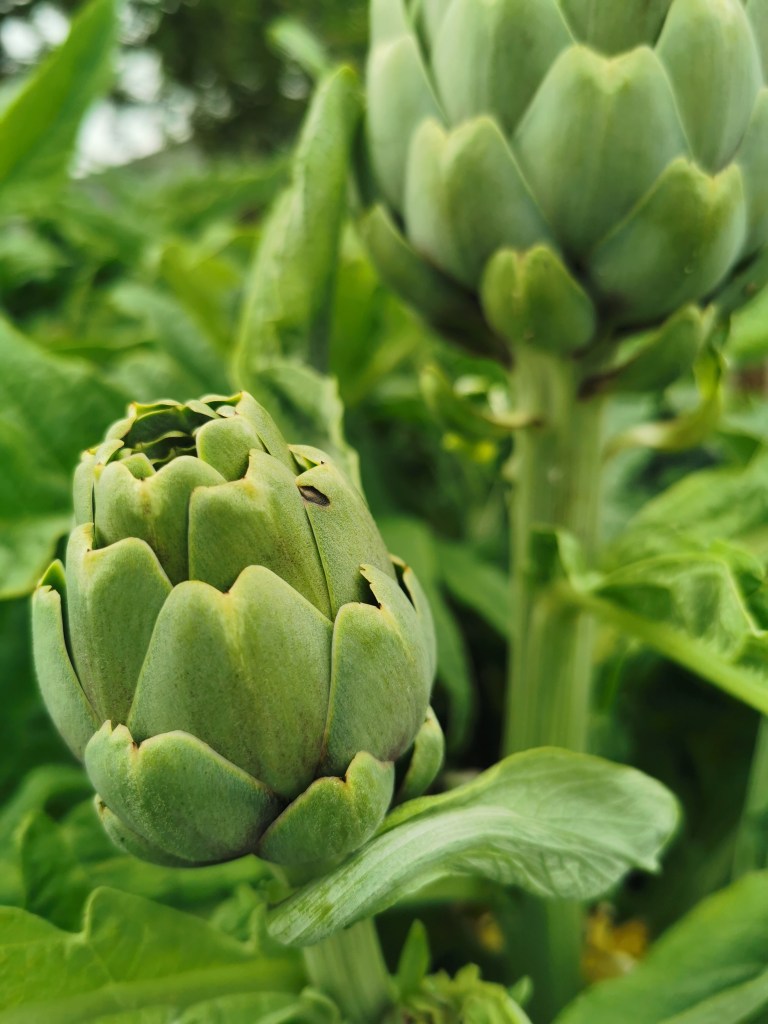
There are many claims as to the health benefits the globe artichoke. They are packed with atioxidants quercertin, rutin, anthocyanins, cynarin, luteolin, and silymarin. The last, silymarin, is a controversal treatment for liver disease and cynarin is what protects you from the bad cholesterol in your diet. It is claimed the globe artichoke is high in vitamin C, folate to protect from birth defects, potassium to help counter the sodium in your diet and reduce blood pressure. Lastly they are very high in fibre which is the best thing for your gut and also regulates blood sugar. With all that going for them we call artichoke season our annual spring cleanse. Our little patch of 12 plants produces around 144 artichokes and they grow in threes around the first central flower bud. By mid December its all over.
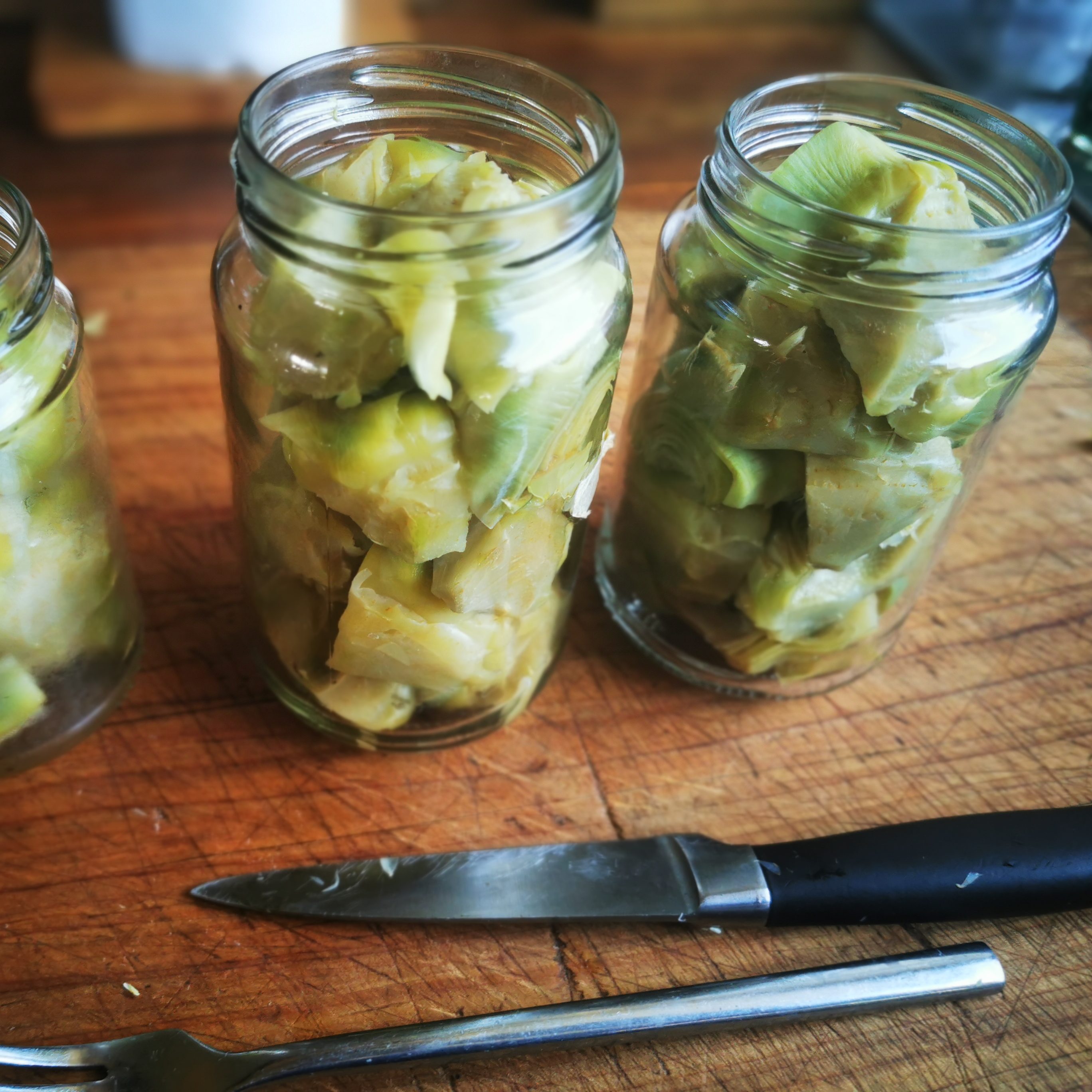
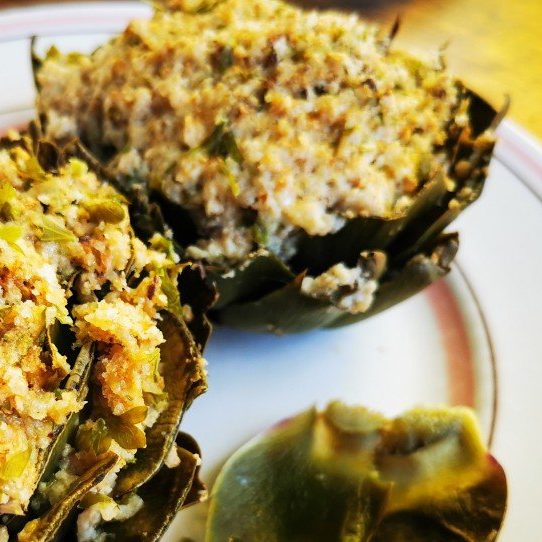
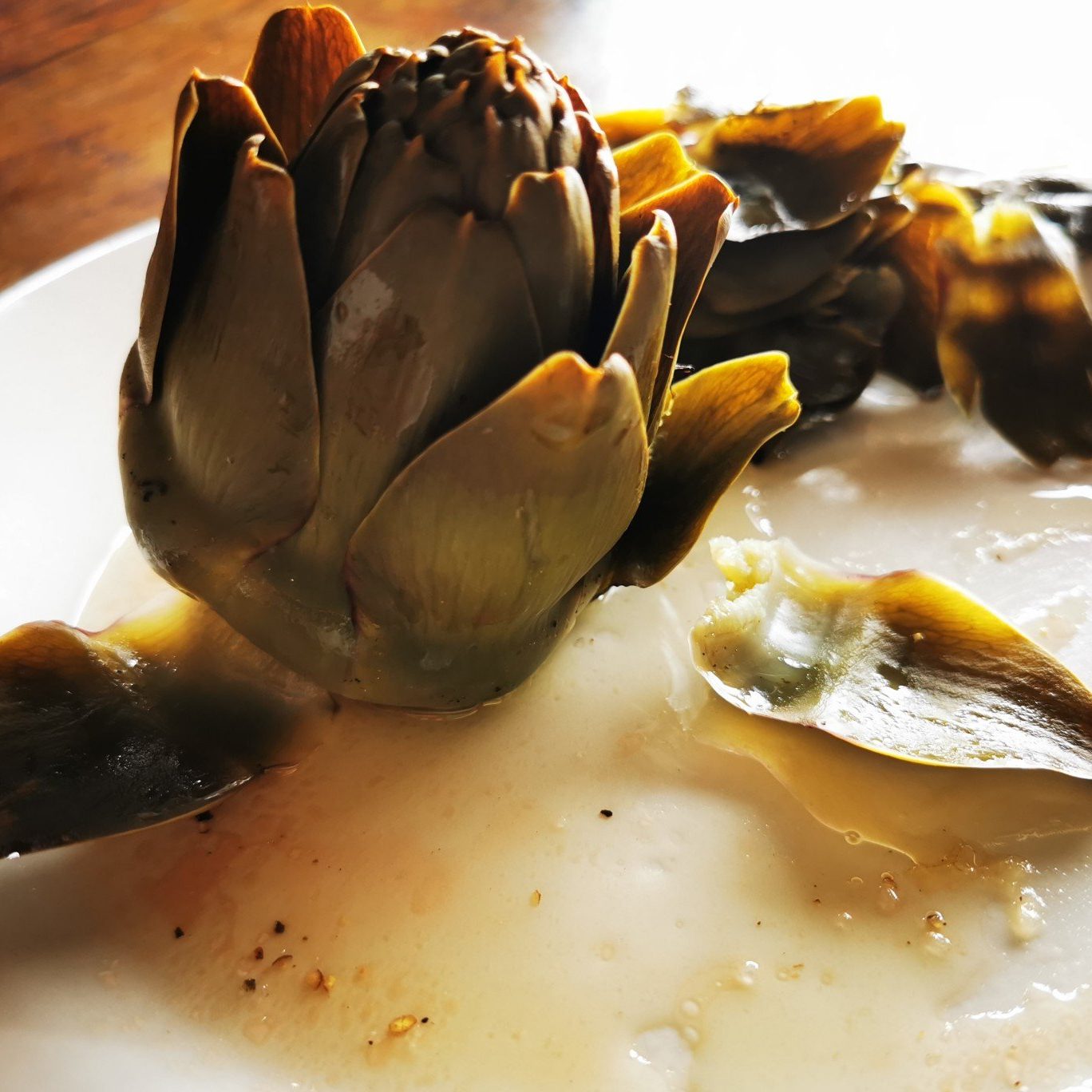
 food ripe from my garden